
The Cost of Living in Survival Mode
Understanding Fight, Flight, Freeze, and Fawn—And How Your Nervous System Finds Its Way Back
Have you ever reached the end of the day and realized you've been holding your breath?
Or snapped at someone you love over something small and wondered, "Why did I react like that?"
Maybe you've felt completely exhausted but couldn't seem to slow down. Or perhaps you wanted to make a change in your life but felt stuck, unable to move forward no matter how much you wanted to.
If any of those experiences sound familiar, you're not broken.
You may simply have been living in survival mode for longer than your body was ever designed to.
One of the beautiful things about Biodynamic Craniosacral Therapy is that it helps us understand these patterns with compassion. Instead of asking, "What's wrong with me?" we begin asking a different question:
"What has my nervous system been trying to protect me from?"
That subtle shift changes everything.
Your Nervous System Is Always Working for You
Your nervous system has one primary job: to help keep you safe.
Every moment of every day, it's taking in information from both your environment and your body. It notices your surroundings, your relationships, your stress levels, your workload, and even the thoughts running through your mind. Based on what it perceives, it decides whether you're safe enough to relax or whether it's time to prepare for action.
The problem is that our nervous systems were designed to respond to short-term threats—not months or years of ongoing stress.
When the demands of life never seem to let up, the body can begin responding as though the emergency never ended.
Over time, survival mode starts feeling normal.
Survival Doesn't Always Look Like Panic
When people hear the phrase fight or flight, they often picture someone running from danger or reacting with obvious fear.
In reality, survival responses show up in much quieter ways. They can become so familiar that we simply mistake them for our personality.
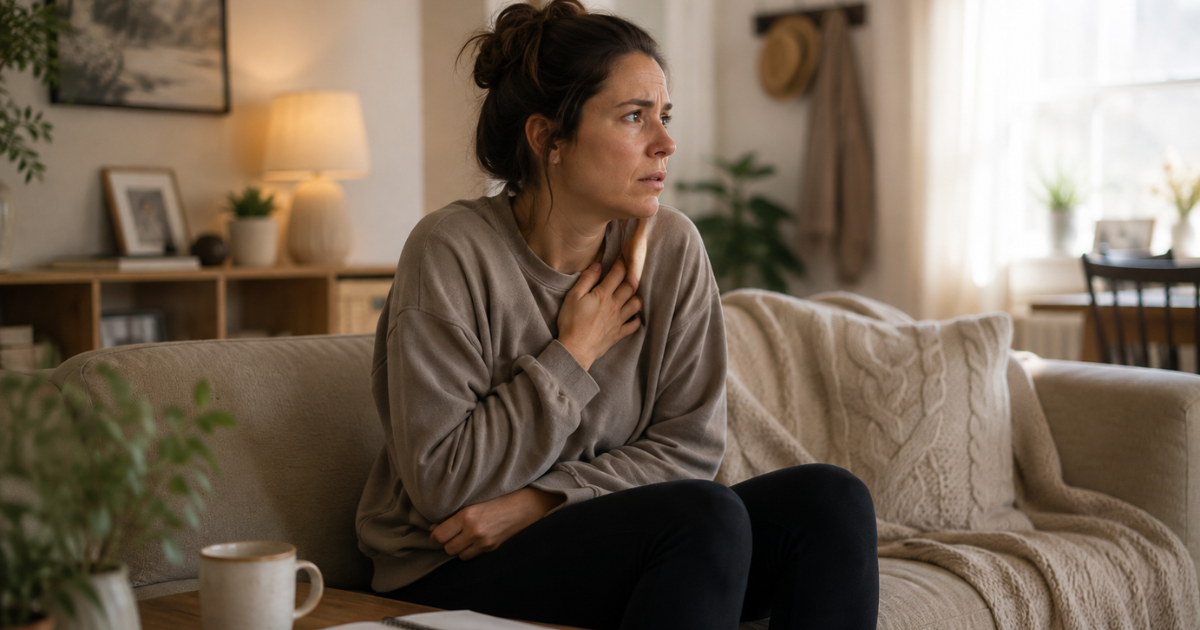
Fight
Fight doesn't always mean yelling or becoming angry.
Sometimes it looks like irritability, frustration, perfectionism, or feeling easily overwhelmed by everyday situations. It can be the parent who reacts more strongly than they intended when the kids are loud, the coworker who feels constantly defensive, or the person who becomes impatient because their nervous system is already carrying more than it can comfortably hold. It can even feel like constant tension or bracing in your arms.
Flight
Flight isn't always about physically leaving. It often looks like constant busyness.
You keep moving because slowing down feels uncomfortable. Your calendar stays full, your mind races from one task to the next, and even when you sit down to rest, you find yourself reaching for your phone or thinking about everything you still need to accomplish.
Many people living in flight don't realize they're exhausted because they've become so accustomed to always being "on."
Freeze
Freeze can feel confusing because it often looks like doing nothing when you desperately want to do something.
You know you should make the phone call, start the project, clean the house, or make an important decision—but you can't seem to begin.
It's not laziness. It's not a lack of motivation. Sometimes it's a nervous system that's become so overwhelmed that stillness feels like the only available option.
Fawn
Fawn is perhaps the least understood survival response. It often shows up as people-pleasing.
You say yes when you want to say no. You avoid conflict at all costs. You worry about disappointing others and spend so much energy making sure everyone else is comfortable that you lose touch with your own needs.
Many people don't recognize this as a survival response because society often praises it. But constantly abandoning yourself to keep the peace comes at a cost.
When Survival Becomes a Lifestyle
The challenge isn't that we experience these responses. The challenge is when we never leave them.
Living in survival mode can affect nearly every aspect of life. Sleep becomes more difficult. Muscles remain tense. Digestion changes. Patience becomes harder to access. Relationships feel strained because we're responding from protection instead of presence.
Perhaps most importantly, we begin believing this is simply who we are:
"I'm just an anxious person."
"I'm just impatient."
"I've always been this way."
But what if those aren't personality traits at all? What if they're patterns your nervous system developed to help you navigate difficult experiences?
If they were learned, they can also begin to change.
Healing Begins with Safety, Not Force
This is where Biodynamic Craniosacral Therapy offers something beautifully different.
Rather than asking your nervous system to stop reacting, BCST creates the conditions where your body no longer feels it has to remain in survival mode.
Healing isn't about convincing yourself to calm down.
It's about experiencing enough safety that your body naturally begins to settle.
As your nervous system finds greater regulation, many people notice subtle but meaningful changes. They sleep more deeply. They breathe more fully. They recover from stressful moments more quickly. They discover they have more patience with their children, more presence with their partners, and more compassion for themselves.
Life doesn't stop being life. But it no longer feels like every moment is something you have to survive.
Returning to Yourself
One of my favorite things about this work is watching clients rediscover parts of themselves they thought they had lost.
They laugh more easily.
They feel more present.
They notice beauty again.
They stop rushing through every moment.
And perhaps most importantly, they begin trusting their bodies instead of fighting against them.
Healing isn't about becoming someone new. It's about creating the conditions for your nervous system to remember that it is safe enough to come out of survival and return to the health and resilience that have always been within you.
If you've been feeling like you're constantly pushing through life, know that you don't have to stay there. Your nervous system was never meant to carry the weight of survival forever.
Sometimes the first step toward healing isn't doing more. It's giving your body permission to finally let go.
Ready to support your nervous system — and keep it supported?
Book a session at cranialjones.com · 720-312-4627 · cathy@cranialjones.com
7425 E. Peakview Avenue, Building #10, Centennial, CO 80111 · Open by appointment only